2025. 11. 19. 20:01ㆍ카테고리 없음
마침 대통령께서 아랍에미레이트를 방문하신다길래 전에 UAE에 대하여 쓴 논문이 생각나서 올려본다.
중동문제연구, 제16권 3호
중동문제연구소, 2017, 203~246
The UAE’s International Education Hub:Its Purpose and Success
Leeh, Jhong-Kyu*
*Director General, General Affairs, Gong-Ju National University of Education
Contents
Ⅰ. Introduction
Ⅱ. Precedent Research
Ⅲ. Research Design
Ⅳ. Analysis
Ⅴ. Discussion
Ⅵ. Conclusion
<❘Abstract❘>
The purpose of this study is to interpret the purpose and success factors of the international education hub through the phenomenological method, focusing on the case of the United Arab Emirates (UAE). The UAE’s international education hub had no purpose from the beginning. So the interpretation of non-purpose was interpreted as “eloquence of the land of opportunity.” The investor’s position was a “treasure hunter,” and the entirety of both objectives could be visualized in the “California gold rush.” The quality assurance of education is considered as the most important success factor because the international branch university cannot survive if the quality standard is not secured. The phenomenon of the quality assurance of education has come to be interpreted as “a consolidator.”
※ Key Words: International Education Hub, Success Factors, Eloquence of the Land of Opportunity, Consolidator
Ⅰ. Introduction
The purpose of this paper is to study the purpose and success factors of international education hub, which is one of the types of higher education internationalization, focusing on UAE (United Arab Emirates) cases. According to Mukerji & Tripathi (2013), education hub is an area designed to enhance national competitiveness by providing high quality education to domestic and foreign students. The Education Hub also provides a basis for knowledge production and innovation through education and training. Therefore, the education hub is a cluster of students, programs, research institutes, and knowledge industries, forming a hub. According to Knight (2013), the education hub is divided into countries, zones and cities according to the level. At the national level, the UAE, Singapore, Malaysia, and Incheon, Dubai and Iskandar are the zone levels, and cities such as Boston, Adelaide, and Bangalore are examples. Scholars argue that the reason for setting up an educational hub is largely due to economic motivation (Kalvermark & Van der Wende 1997, Van der Wende 2001, Slaughter 1998). However, through internationalization efforts, strengthening the economy of developing countries and selecting other development needs are clearly important, but they can have different consequences for the invest institutions and host countries. The real problem, as discussed in Kreber (2009, 3-4), may be a fundamental problem when economically motivated efforts take precedence over education concerns. In particular, countries that need the most development in the free market economy remain the most disadvantaged, and if only Western advanced education providers are profitable, then unequal results may occur. Therefore, the research motive of this paper is to examine the purpose of installing the hub in the first place, under the possibility that the beneficiary side and the disadvantaged side can occur. Then, through the study of the success factors, the researcher tries to consider what kind of equity scheme would bring beneficial results to both the host country and the investment institutions. The study used phenomenological methods to accurately look at the phenomenon of thought. According to Giorgi (2007, 64-65), Husserl’s phenomenological method first assumes a priori (transcendental) phenomenological attitude in the first step. And, in the second step, it consciously brings examples of phenomena explored with the help of free and imaginative changes, whether they are real or fictional. The thirds step carefully describes the found essence. The feature here is the closing and reduction of experience and knowledge called bracketing. The reduction refers to the fact that one has to refrain from positing the existence of the given that is encountered as normally happens in the natural attitude. However, the Heidegger’s phenomenological methods appear in the form of reduction, construction and destruction. Phenomenological reduction means leading phenomenological vision back from the apprehension of a being (ibid, 66). The reduction from beings to being requires that “we should bring ourselves forward toward being itself. . . . It must always be brought to view in a free projection (Heidegger 1982, 21-22).” This step is a phenomenological construction.
“There necessarily belongs to the conceptual interpretation of being and its structures. . . . a destruction—a critical process in which the traditional concepts, which at first must necessarily be employed, are de-constructed down to the sources from which they were drawn(ibid, 22-23).”
Unlike Husserl, Heidegger does not have a bracketing process.
The contribution of this paper to the academic achievement is to identify the purpose and success factors of the international education hub in UAE and to expand the knowledge of the benefits, risks and challenges that are gained there, to the research literature of the international education hub.
Ⅱ. Precedent Research
The concept of the education hub is conceptualized by Knight (2013), which distinguishes that education across borders has evolved into third generation. The first generation refers to the traditional way of studying by studying with a student’s full-time degree, one or two semesters, or an exchange student. The second generation refers to the case where programs and educational providers move across borders. Twining and franchise programs, joint / double degree programs, virtual, branch campus, and bi-national universities. The third generation is what we call an education hub, where students, programs, educational providers, research institutes and knowledge industries work together.
According to Knight (2013), there are three types of educational hubs: Student Hub, Talent Hub, and Knowledge Hub. The education hub is still evolving its concepts and realities. Kreber (2009) cites Van Vught et al. (2002, 103) and notes that internationalization of higher education includes;
“Transnational movement of students and faculty, internationalization of curriculum and quality assurance, interagency cooperation between education and research, and building an international university consortium. In addition, there was a strong growth in cross-border delivery of education, which leads to the real market of export and import of higher education products and services.”
Kreber (2009) has two motives for this internationalization. One is the sharing of resources in cooperation with the institutions of other countries, which means that programs of education and research can be enriched and provided to institutions. The other is that western universities, which have experienced declining support from the public funds in the last decade, see the demands of developing countries’ internationalization as a very good opportunity to increase their budgets. Therefore, they intend to participate competitively in cross-border education. Scholars argue that the motivation for internationalization is economic in the end (Kalvermark & Van der Wende 1997, Van der Wende 2001). Slaughter (1998) also introduces concepts such as entrepreneurships and Academic Capitalism
which can eventually be seen as an economic point of view by competition. Kreber (2009, 5) argues that if the motivation for internationalization is economic, then the underlying problem that accompanies it raises questions about how to define the purpose of higher education. Because global competition makes it easier for higher education to lose sight of traditional academic values such as social criticism, preparation for civic life, learning and academic pursuits derived from curiosity. Knight (1997) argues that internationalization efforts due to the impact of globalization will be perceived differently depending on how a particular country is positioned in the global society and global economies. Here, the internationalization in the context of globalization is as follows. Internationalization and globalization are often used together, but scholars believe that internationalization efforts are the act of taking precautionary measures in response to external macro-economic and socio-economic processes and globalization that they cannot control (Knight 1997, Van der Wende 1997, 1999). Knight (1997, 6) states that globalization is the distribution of technology, economy, knowledge, people, values and ideas across borders. Globalization affects countries in different ways because of their individual histories, traditions, cultures and priorities. Internationalization of higher education is one of the ways in which a country respects the identity of its country and responds to the impact of globalization. Kreber (2009, 2, recited from Van der Wende 1996, 23) describes the purpose of internationalization as follows.
“Iinternationalization refers to any systematic, sustained effort aimed at making higher education (more) responsive to the requirements and challenges related to the globalization of societies, economy and labor markets.” ...There are positive, even ethically defendable outcomes to partially, or even entirely, economically motivated efforts to increase internationalization (ibid, 6)… “Strengthening the economy and addressing other development needs of developing countries, through their internationalization is clearly important but has different consequences for the country that is “providing services” and the country that is “receiving” them. A real problem arises when economically motivated efforts become the overriding concerns for education, and particularly, if in a free market, countries most in need of development remain the most disadvantaged as a result of unequal opportunity(ibid, 6).”
Murphy (2007, recited from Kreber 2009, 6) points out three further possible and interrelated risks to developing countries that see internationalization as a solution to their development needs: the imposition of foreign and inadequate models to solve domestic problems, the potential loss of human and intellectual capital, and connected to the previous two, the weakening of the domestic university system as it plays a marginal role in the development of the country. Forestier & Sharma (2013) argue that;
“Among the key motivations are to internationalise and modernise the higher education sector in the host country, develop a skilled workforce and retain students, attract foreign direct investment and increase the country’s economic competitiveness, and enhance geopolitical status using soft power, … Countries such as Botswana, Hong Kong, Malaysia, Qatar, Singapore and the United Arab Emirates (UAE) had different motivations. However, a shift towards a knowledge economy underlines the rationale in most of the countries. In Gulf countries in particular there is a definite shift towards a knowledge economy from their dependence on oil.”
The Higher Education Hub helps local development, hopes to attract significant foreign direct investment for tertiary education as well as industry and infrastructure development, and provides educational providers with a favorable tax environment, financial grants and loans, and land grants. According to C-BERT (The Cross-Border Education Research Team, January 20. 2017)1), there are a total of 33 countries exporting international branch campus globally, and the five countries with the highest export numbers (number of institutions with branches) are United States (51), United Kingdom (28), France (13), Russia (13), and Australia (10). The number of established branches is the order of United States (77), United Kingdom (38), France (28), Russia (21), and Australia (14). The total number of importing countries is 76. In terms of imported campuses, the largest campus importing countries are China (32)2), United Arab Emirates(32), Singapore(12), Malaysia(12), and Qatar(11).
UNESCO & UNDP(2013, 9-11) describe that culture is a driver of development, led by the growth of the creative economy in general and the creative and cultural industries in particular, recognized not only for their economic value, but also increasingly for the role in producing new creative ideas or technologies, and their non-monetized social benefits. Critical factors of success have been identified, ranging from local capacity development, management of local assets by locals, as well as facilitating transnational connections and flows. This success is, however, constrained by weak governance of these sectors. Educational hubs usually form groups or clusters, according to Newbigin(2014), “a hub usually means a building or a collective building. A hub is a very specific place that provides a working space for creative entrepreneurs, a support and exhibition, or a place of sale, and serves as a central point for a wider network, hence the analogy of a hub as the center of a wheel. Clusters’ describe a group of related or mutually dependent businesses and resources that are grouped together in a neighborhood or part of a city although, as noted above, the cluster may be a virtual network that is dependent on good internet connectivity rather than physical proximity.”
NESTA (2010, 5) also emphasizes creative coupling and inter-organizational connectivity within clusters as a requirement for successful hubs and clusters.
The British Council (2012, 7) analyzes global tertiary education trends and student enrollment and international student transfers by 2020 as follows. First, worldwide enrollment in tertiary education reached 170 million in 2009, with 45% of students enrolled in China, the United States, India and Russia. International students worldwide reached 3.5 million in 2009 from 800,000 in the mid-1970s. The other countries that have registered many students are Brazil (6.20 million), Indonesia (4.9 million), Iran (3.4 million), Korea (3.3 million) and Turkey (3 million). Major international students are from China, India, Korea, Germany, Turkey and France. The target countries that are going to study abroad are USA, UK, France, Germany, Russia, Japan, Canada, and this country absorbs 60% of total international students. Other countries that are studying abroad are South Africa, Singapore, Hong Kong, Malaysia and Korea. The major countries in which inflows outweigh the outflows are the US, the UK, Australia, Germany, France, Japan, Russia, South Africa and Canada. The main countries in which outflows exceed inflows are China, India, Korea, Kazakhstan, Turkey and Morocco. A total of 21 million tertiary enrollment students are expected to increase by 2020. On the other hand, following the analysis above, the British Council analyzes the future opportunities of transnational education (TNE) as follows:
● Dual and joint degrees: China, USA, France, India, and Germany
● Franchising and validation: Asia, Latin America, Africa (Nigeria)
● Branch: Far East Asia, Middle East
● Online education: Gulf countries, Asia, Scandinavia
The British Council (2016, 2) created the term “creative-hub” through research centering on the UK. Its core is diversity and the creative hub is the beacon of the new city economy. Meanwhile, creative hubs have become the nest for freelancers and small and medium sized companies to gather together to connect and collaborate. The British Council has created a creative hub toolkit (British Council 2015) by studying examples of creative hubs in the UK and contributed to the insights and resources of the global creative economy. Newbigin (2014) argues that in the dominant globalized industrial economy of the 20th century, manufacturing was increasingly driven to parts of the world where labor was cheap and the costs of taxation, energy and environmental regulation were low. The creative industries are different. Their success is dictated less by external costs such as labor and energy and more by the human talent that drives them and that, in turn, means the social and cultural environment in which they are located. This emphasizes the importance of the place and says that what is important here is the local capabilities and not the local needs. In general, Knight (2014)’s international educational hub and British Council(2015)’s creative hub are mixed, but their essential meaning is not much different. Hub has contributed to improving the national economy and competitiveness while having different purposes and functions depending on the installation location and purpose. Also, there seems to be no universal one as a successful element of each hub. They started with different motives and incentives. Some, without a clear purpose, under the principle of natural supply and demand, some have declared a clear purpose.
Ⅲ. The Research Design
The materials were collected from various sources such as government documents, books, press releases, and press articles related to the UAE’s educational hub, and the data were classified as the purpose of the hub and the main success factors. Data were collected and interpreted in two directions. The first is the perspective of the UAE, the second is the position of the foreign or foreign university that establishes a branch or institute. The analysis also had to be considered in two aspects. Data collection is the primary task for interpretation. Through the phenomenological method, the purpose and success factors of the education hub were analyzed. There are two approaches to phenomenological methods, Husserl and Heidegger, which are based on the Heidegger approach. Husserl’s method involves three steps: (a) One assumes the transcendental phenomenological attitude, (b) one brings to consciousness an instance of the phenomenon to be explored, whether actual or fictional, and with the help of free imaginative variation, one intuits the essence of the phenomenon being investigated, and (c) one carefully describes the essence that has been discovered (Giorgi 2007, 64). With Husserl’s method, the key step is the first one—the assumption of the transcendental phenomenological attitude.
“To assume the transcendental perspective means to adopt an attitude of consciousness that transcends the orientation toward the human mode of being conscious and that is also free from worldly and empirical assumptions. To be in the phenomenological attitude means two things: performing the epoché (or “bracketing”) and the reduction, which refrains from positing the existence of whatever is given. To bracket means to put aside all knowledge of the phenomenon being explored or investigated that is not due to the actual instance of this phenomenon. Thus all past knowledge derived from readings or other secondary sources, as well as one’s former personal experiences with the phenomenon, are meant to be excluded. The reduction refers to the fact that one has to refrain from positing the existence of the given that is encountered as normally happens in the natural attitude.… To employ imaginative variation means that one imaginatively varies different aspects of the phenomenon to which one is present in order to determine which aspects are essential to the appearance of the phenomenon and which are contingent. If the imaginative elimination of an aspect causes the phenomenon to collapse, then that aspect is essential. If, on the other hand, the variation of an aspect of the given hardly changes what is presented, then that aspect is not essential. Once the essential features of the phenomenon have been determined, they are carefully described. This means that nothing is to be added to or subtracted from what is actually present to consciousness. The descriptive task is a strict one (ibid, 64).“
Giorgi(2007) then explains the Heidegger, which has very different phenomenological methods from Husserl. “His purpose in his philosophy is the pursuit of the question of being. The question of being leads Heidegger to the realm of the a priori (ibid, 65).” Heidegger (1982) writes that:
“The a priori character of being and of all the structures of being accordingly calls for a specific kind of approach and way of apprehending being—a priori cognition. The basic components of a priori cognition constitute what we call phenomenology. Phenomenology is the name for the method of ontology, that is, of scientific philosophy. Rightly conceived, phenomenology is the concept of a method.”
Thus, for Heidegger, phenomenology is primarily a method and he employs it almost exclusively in order to articulate and clarify the phenomenon of being (Giorgi, 2007, 66). Heidegger’s phenomenology appears in terms of reduction, construction, destruction. Heidegger (1982,21) explains on the phenomenological reduction as ;
“...for us phenomenological reduction means leading phenomenological vision back from the apprehension of a being, whatever may be the character of that apprehension, to the understanding of the being of this being (projecting upon the way it is unconcealed).”
Giorgi(2007, 66, Heidegger 1982, 21-22) goes on that Heidegger also says that the reduction from beings to being requires that “we should bring ourselves forward toward being itself... It must always be brought to view in a free projection.” He calls this step “phenomenological construction.” Heidegger (1982, 22-23) adds that “there necessarily belongs to the conceptual interpretation of being and its structures... a destruction—a critical process in which the traditional concepts, which at first must necessarily be employed, are de-constructed down to the sources from which they were drawn(recited from Giorgi 2007,66).” It is here that Heidegger gives a special meaning to description as well. He claims that it has more of a sense of prohibition rather than a positive sense. He states that description means “the avoidance of characterizing anything without such a demonstration (Heidegger 1982, 59).” He explicitly states that description for phenomenology as he understands it does not mean the type of procedures that are used in positive or human sciences, whereby language is used to articulate the objects of study. What then is it about a phenomenon that phenomenologists want to see? For Heidegger it is “any exhibiting of an entity as it shows itself in itself (Heidegger 1982, 59, recited from Giorgi 2007, 67).”
“Because of this hiddenness, or the covered-up-ness which Heidegger calls the counter concept to phenomenon, interpretation is required and therefore a hermeneutic becomes necessary. This hermeneutic turns to Dasein, since Dasein is the be ing that has some understanding of what it means to be. Being is somewhat uncovered to Dasein and the hermeneutic task is to tie into that uncovering movement. Yet, for Heidegger, Being is for the most part hidden, even to Dasein, and so phenomenology must be a hermeneutics (Giorgi 2007, 67).”
Methodologically, this study chose a qualitative approach, a phenomenological approach, and a strategy to focus on individual cases in collecting and analyzing primary and secondary data. Therefore, the results are limited conclusions for individual special cases, rather than positivistic universal generalizations.
Ⅳ. Analysis
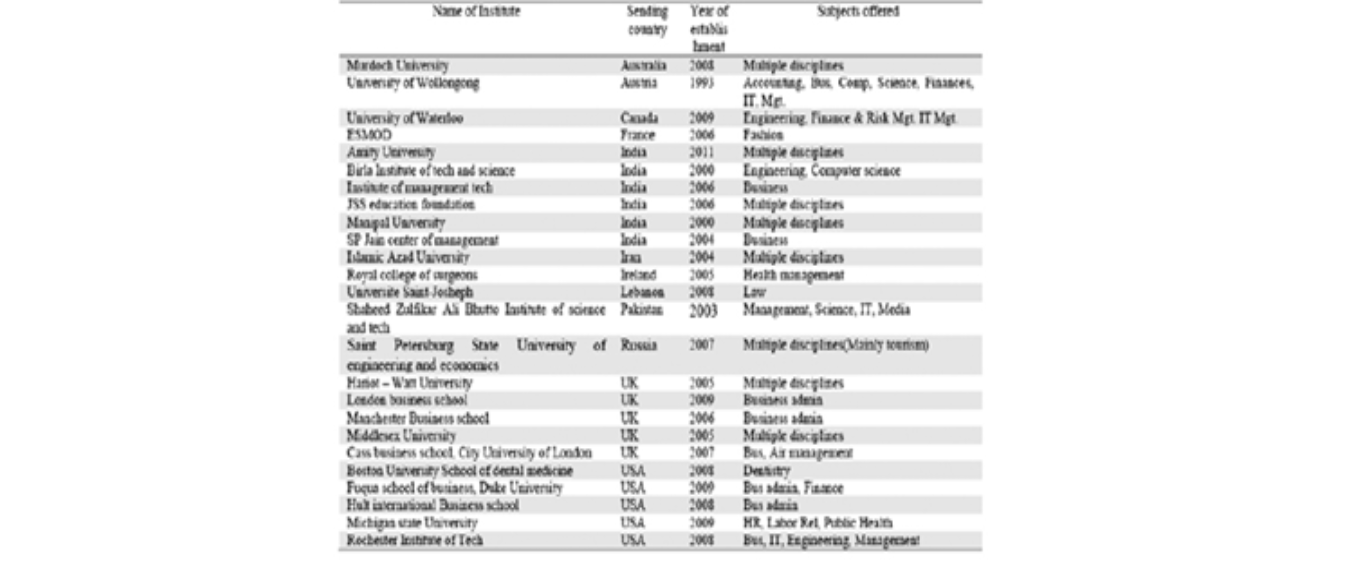
The UAE was formed on December 2. 1971, as a federation of six emirates of Abu Dhabi, Dubai, Sharjah, Ajman, Fujairah and Umm al-Quwain that had been ruled by individual monarchies. Shortly after, the seventh emirate Ras al-Khaimah joined the federation as well (Fox & Al Shamisi, 2014, 63). Today, the UAE is a highly developed modern oil exporter, and Dubai in particular has developed into a global hub for tourism, retail and finance with the world’s tallest building, and has the world’s largest artificial harbor. The Federation decided to maintain its security and economic benefits on the grounds of many discussions after its formation, and reigned for 33 years until Sheikh Zayed bin Sultan Al Nahyan died as the first president in 2004 (Fox & Al Shamisi 2014, 63). After first president death, Maktoum bin Rashid Al Maktoum of Dubai, served on a one-day duty at 2 November 2004. Khalifa bin Zayed Al Nahyan from Abu Dhabi has been in office since November 3, 2004. Abu Dhabi’s main source of income was oil, which was covered by defense, transportation, health and education. Abu Dhabi has taken 2.8 million barrels of oil a day out of the region, making it the largest sovereign wealth fund in the world. Abu Dhabi’s oil reserves account for 7.5% of the world’s total reserves (Fox & Al Shamisi 2014, 64). According to the Dubai Strategic Plan 2015 adopted in 2005, the priority areas for development were set up primarily for various purposes, such as health centers, media cities, Internet City, Silicon Oasis, Jebel Ali Dubai Airport, Dubai International Finance Center, Knowledge Village, and Dubai International Academic City (Fox & Al Shamisi 2014, 67-69). This free zone created an important opportunity for Dubai to attract many international branches and training organizations. One barrier to establishing a new branch is the cost of capital development. To minimize this, TECOM, a free zone operator, developed the necessary physical infrastructure, leased space, and avoided high installation costs and facility installation costs. Hariot-Watt University and Manipal University used such a system. Branch Universities in free zones are not subject to the obligation to pass the licenses conducted by the government’s Academic Accreditation Board and are not subject to regulatory, tax, bureaucratic intervention. According to OBHE3) et al. (2012, quoted in Fox & Al Shamisi 2014, 69), 25 international branch universities in Dubai are shown in Table 1.
Abu Dhabi has invested heavily in a number of national, private and international institutions. Abu Dhabi has been generously supported by inviting New York University, Sorbonne University, and INSEAD4) from among the branch universities that want to set up campus.
Table 1. International Branches of Dubai
New York University received funding and campus grounds in the Emirates and Abu Dhabi is directly contributing to the success of the UAE by ensuring long-term survival and quality as a hub in research and education. Abu Dhabi has planned the development of national and private universities in line with the vision of the UAE as the founding and educational hub of technology-led enterprises. Abu Dhabi has had a different approach to developing branches from Dubai or Ras al-Khainah. Abu Dhabi did not choose to place free economic zones or campuses as an important investment destination, and did not consider them as an income source. Table 2 shows five branches in Abu Dhabi (Fox & Al Shamisi 2014, 68-70).
Table 2. International Branches of Abu Dhabii

Sharjah has developed an important strategy, the Higher Education Zone, to attract ① the Federal University campus, ② to attract universities in the United States, and ③ to attract Sharjah University, which has Arab-style and policy programs compatible with local cultures. These are the most impressive university towns built by the Emirates. Sharjah’s tertiary education zone is not a free economic zone because it has the purpose of establishing it as a university city. This has made a lot of progress in the registration of international and local students. Other interesting developments in Sharjah are community colleges to better prepare more emirates in the workplace. This college is not a national plan, but it shows innovation and independence at the Emirates level. This has improved the image of Sharjah to a location where it can receive quality education in the place of investment and business. It has already earned a reputation as a cultural center of the North Emirate in university cities, art galleries, as well as art and literature programs (Fox & Al Shamisi 2014, 70). Ras al-Khainah, a small Emirate at the north end of the Gulf Bay, has established a highly publicized strategy for higher education to attract universities, technology research centers and medical institutions(refer to Table 3). Signs a research contract with the Federal Institute of Technology of Lausanne, Switzerland for energy research and promotes research. Lausanne Tech operates a collaborative program and graduate program as a sister program (Fox & Al Shamisi, 2014, 70-71).
Table 3. International Branches in Ras al-Khainah

Source : OBHE et al.(2012)
Director of Higher Education, Knowledge and Human Resources Development, Dubai Warren Fox says in an interview ;
“It’s good for the UAE to be included in this list of such countries, especially Dubai, which is known as a hub for branch campuses from around the world,” Dr Fox said.“The UAE has achieved this status of being an international hub in spite of there being no national policy to do this. Plans have come from an emirate level. The purpose of the UAE’s educational hub was to have no national goal, but only a shared wish of the people for economic prosperity(Swan, February 27 2014).”
Achieved the largest educational hub in the world under no goal.
According to Fox & Al Shamisi (2014, 64), the population of the UAE has grown from 4.1 million in 2005 to 8.26 million in 2010, doubling in five years, with 90% of them expatriates. Let’s look at what the non-goal of the aforementioned educational hub is as being. Could there be a purpose of nothing? Such fact does not exist in reality. Because the name of non-purpose was given by us, not because it was originally. In the same way, the state of no purpose in any idea is given to the situation of the world. However, the non-purpose actual existence mode (Dasein) does not set a standard or foundation to accomplish something or to achieve it. It’s a priori being is disregard or indifference or stop of thought. Therefore, the fore-structure of a non-purpose is not a hostile contemplation, nor a benevolent contemplation, nor is it a neutral position. It is a natural occurrence. Natural development is manifestation, in which objects that are in or hidden from the outside appear or are made to appear, or the result. But it has something to do with the shared wish. The concrete content of the shared hope should be gold. This is because the party that provides the international branch is here the activist of the Golden Rush. In general, the goal of individual countries in the Emirates is economic prosperity, so the shared hope is to imagine a real substance called gold. However, since the UAE dimension is non-purpose, it cannot be displayed as a real existence called gold. Could it be called West in the direction? The word “western” hides the meaning of western California where gold is buried. California, which has been marked by a gold-rich west in the past, is a place where many people are hopeful. This is because it is the place where the hope of a person who wants to find a gold and find a stable life is rich. There is no possibility for no purpose. However, overturning no purpose is another expression of complete confidence. It is close to the perception of people who have already succeeded. Here is an advertisement that says that the gold is buried, so come and go. In fact, Abu Dhabi has 7.5% of the world’s oil reserves and can exist for decades in the future. Abu Dhabi has created super large national wealth with oil, making cities with this money, and suddenly making Bedouin, the nomadic desert, a citizen of a super modern city. At the root of nothing, self-confidence starts to appear. This requires different interpretations. For example, consider the following description.
“In the spring of 2011, the Arab world found itself erupting with demonstrations demanding for political and economic changes and greater citizens’ participation in public affairs. Followed by demonstrations and protests in Tunisia which forced out the government, Egypt experienced public outcries in March 2011 and President Mubarak was forced out of office. Closer to the UAE, Yemen experienced unprecedented unrest and violence; Bahrain sought the intervention of Gulf cooperation Council troops to end the disruption. It is a critical time for the middle east and North Africa (Mena), especially for the youth of the Arab states, and for democratic progress in the region. However, UAE has not faced any such turmoil or challenges which is an indication of the relative political stability that the country enjoys(Fox & Al Shamisi 2014, 64).”
The UAE leader and the people enjoyed a stable and stable political situation, which is also the power or ability of the people. Now, let’s start with the words of self-confidence and ability that come back from the first purpose of nothingness. Yet we must be reconciled with the treasure seeker who wants to go west in this discussion. When you return to another reality, the treasure hunter is not looking for gold in the wilderness or the fields, but is in a position to find gold in an artificial city built with astronomical money. Therefore, Gold rusher is a treasure hunter or raider. It is full confidence and ability that reveals nothing and the California gold rush becomes a treasure hunter. In the end, the purpose of zeroing is to present the full confidence and ability free of charge, and the treasure hunter is in charge of finding the confidence and ability rather than the money, and the two concepts are incongruous. Once again, confidence and ability are spiritual. Those who look for them must be investigators, followers, or pilgrims. Practically, education is a service area, and an international branch has entered the UAE to sell services. Now gold and gold rushes make up confidence and power, and Raiders make up spiritual and inquirer. It is hard to make a satisfactory interpretation even if pushing and pulling like this and going back and forth again. The researcher looked for other data supplementary.
“Trade has always been central to the UAE because of its geographic location on the Arabian Gulf offering pathways to India, Iran, Iraq, Oman, Africa, and the Middle East. Shipping import, and re-export of gold, cloth, spice, and silk commodities had been the heart and soul of its economic activity. Now oil is the high octane fuel propelling the federation to the future, along with trade, tourism, and retail sales. All these trade sectors are part of the UAE plan to expand as an economic hub. But the increasing importance of the knowledge economy is forcing the UAE to shift its focus more and more to the knowledge and service sectors (Fox & Al Shamisi 2014, 64).”
“Another factor favoring to positioning of the UAE as an education hub is its location and quality of life. For centuries, the lower Arabian Gulf and the larger territory of Oman have been at the crossroads of trade between Asia and Europe and the African East Coast. This strategic location is even more important now, with close to one billion people living within a 5-h plane flight of Dubai. Such a strategic location serves the UAE well to attract institutions and firms, tourists, investor, and professionals that contribute to a planned economic diversification and growth of the country (Fox & Al Shamisi 2014, 64).”
It is likely that the non-purpose concept with a clear place advantage is a neutral one. Confidence and ability are not neutral because they show will. Find a different expression and assign “The Land of Opportunity,” contrasting with the treasure hunter’s figure, the figure that overlaps with the one still shows ‘to the West (California gold rush)’. Failure to state the country’s purpose for the education hub is to disprove confidence and the country’s ability to be a land of opportunity. Confidence and national ability can be described as a combination of geographical location, surrounding population, oil wealth funds, and political stability. Therefore, the purpose of the UAE’s educational hub, which was pursued for no purpose, can be interpreted as “eloquence of the land of opportunity.” The investor can be a “treasure hunter” and visualize the entirety of the two combined goals in a California gold rush. Some have used the same metaphor as this interpretation. Ms. Kosmützky likened the installation of the UAE’s current international branch campuses to;
“To utilise a metaphor, I would compare the whole branch campus story with the California gold rush. People from all over the world went to California to dig for gold. Some got rich and many returned home with a little less than when they left(ICF Monitor Oct 14. 2015).”
It then describes the analysis of the success factors of the UAE’s international education hub. Fox. & Al Shamisi (2014) takes the seven items as the key success factors of the branch. ① Support and promise from the campus, ② knowledge of the local market, ③ financial support, ④ faculty, ⑤ leadership, ⑥ quality assurance, ⑦ program selection.
“Of particular importance is quality assurance. This is because a college that is not guaranteed of quality is immediately exited. If one of the seven factors mentioned above is insufficient, it is sufficient to satisfy it, but the quality of education is not a simple matter unless the quality conforms to the standard, such as facilities, professors, and programs. If quality does not meet the standard, the branch campus will be evacuated and students will not be enrolled. Therefore, the quality of education can be regarded as the most important success factor in the establishment of branch campuses. The education hub relies on the success of the quality assurance process in terms of transparency and soundness. The quality assurance process supports the vitality and reputation of the campus. It is essential for internationally recognized campuses, students, and graduates. The UAE Ministry of Education’s CAA (Commission of Academic Accreditation) has approved more than 70 institutions and UQAIB (University Quality Assurance International Board) in Dubai has approved more than 20 institutions regularly under external quality assurance review.
The International Institute for Technology and Management (IITM) and Mahatma Gandhi University (MGU) that were located in Dubai Knowledge Village have had to shift to Ras Al Khaimah because they did not meet the University Quality Assurance International Board (UQAIB) models developed for university branch campuses operating in Dubai…. Mohammed Darwish, Chief of RCC said: “IITM had chosen to move out of Dubai as they didn’t fit the UQAIB model(Ahmed September 20. 2010).”
“The University of Waterloo recently an-nounced it is closing its satellite campus in the United Arab Emirates next September, due to low enrolment. … said Ellen Réthoré, U of Waterloo’s associate vice-president, communications and public affairs. “Enrolments were building,” she said, “but building slowly(Tamburri January 9. 2013).”
“In its first report on transnational education offered by UK universities in the United Arab Emirates, the Quality Assurance Agency says that only two of the 11 institutions listed as UK branch campuses would meet the definition of a “campus”. “Only two providers, Heriot-Watt and Middlesex, are readily recognisable as branch campuses [offering] the range of facilities a student would expect of a campus in the UK,” according to the Review of UK Transnational Education in United Arab Emirates, published on 4 June. For instance, the University of Exeter’s campus in Dubai comprises an office and a small self-service library, with teaching rooms hired when required, the QAA says. The University of Strathclyde’s Business School, which runs MBAs in Dubai, had no rooms of its own, using spaces within another higher education institution(Grove June 12. 2014).”
The biggest issue of international branches and their programs is about quality assurance. The same is true of the UAE, which has the most international branches in the world. UAE’s CAA is a government organization that oversees the quality assurance of the UAE government. The agency oversees the quality assurance of all federal, private and international institutions in the UAE, but exempts them from overseeing quality assurance for higher education institutions, including federal universities and international branches located in free economic zones. Each emirate is autonomous in its responsibility to develop and manage the quality assurance process for international branches located in free economic zones. Dubai Emirates operates the Dubai government agency, KHDA(Knowledge and Human Development Authority), to ensure the quality of tertiary education enrolled by 400 higher education programs and 20,000 students. It not only oversees higher education in free zones, but is also responsible for basic education development and standards. As the number of overseas branches has increased, a sustainability model for attracting branch universities and protection measures for quality assurance of college life have become necessary for student protection. In 2008, UQAIB was established to oversee the quality issues of Dubai International Overseas Offices. Dubai passed the law in June 2011 and began to oversee quality assurance for the international branch of the Free Economic Zone. This measure has benefited thousands of expatriates in employment or further study. Because it has improved the linkages between universities and employers and inspired other foreign universities that want to have branches in Dubai. It uses experts from around the world to monitor the acceptance of international campuses and the subsequent provision of programs on the same standards that their home campuses provide. It also monitors whether the certification standards of its own country are applied to the branch. This innovative model is called the Equivalent Model. KHDA applied this model in the first free economic zone in the world. The value of a quality is based on four principles. ⅰ) The higher education provider should be approved according to its home country’s official system. ⅱ) The criteria that the campus uses for quality assurance must be approved by the UQAIB and the international standards community. ⅲ) Prove that the campus program is the same as the campus of the home country, and there must be evidence about them. ⅵ) That the UQAIB approved program should be entered into the KHDA registry(Fox & Al Shamisi 2014,72-73).
Abu Dhabi has a different approach to quality management from Dubai. That is, the government invests to secure quality. Abu Dhabi has been generously supported by inviting New York University, Sorbonne University, and INSEAD from among the universities that want to set up campus. New York University has received financial and campus grounds in the Emirates and Abu Dhabi is directly contributing to the success of the UAE as a hub in research and education, and by ensuring long-term survival and quality. Abu Dhabi has planned the development of national and private universities in line with the vision of the UAE as the founding and educational hub of technology-led enterprises. Abu Dhabi has had a different approach to developing Dubai and Ras al-Khainah. Abu Dhabi did not choose to place free economic zones or branch campuses, and considered them as a source of revenue. The concept of quality has various elements ranging from quantitative standards such as facilities and professors to content of the program, contents of lectures, and satisfaction of students and employers. What is the meaning of quality as a success factor? The first thing that comes to mind is the charm of attracting people. And it is the power to let the host country or student to choose. The factors that induce attraction or choice are aesthetic, artistic, friendly, profitable, interesting, easy, confident, beneficial, enjoyment, autonomy, future security, trust, transparency, fairness, goodness, strength, faith, and principles. What is the overall quality of education as a real entity? Some of the top-ranked schools in the world’s university rankings, specifically MIT, Harvard, Oxford and Cambridge. The quality of higher education meets relevant stakeholders, such as quality certification bodies, students, and employers, but it is not an absolute invariant. That is, it is a relative.
Quality management involves finances and efforts. You need a regular monitor. In the end, the first task and task for all the organs of the hub is maintaining quality. To maintain quality and reputation requires justification for degree and quality assurance, which should be provided in the transparency and public domain (Fox & Al Shamisi 2014, 64). In a practical sense, the justification of quality assurance must first be to protect the student. Services must be provided that correspond to the value of the money they pay. And it must be managed in a fair and transparent manner, free from distortion, and in particular in the public sector, which provides accuracy and trust. Quality is awarded externally and at the same time it is created by oneself and it is as diverse as Abu Dhabi and Dubai quality management policy, it has to meet the standards but it is relative, it is a goal to be achieved to some and depends on some. It can be a direct pronoun or an equivalent. Looking at the quality of the product, it is expensive to raise the quality, and it costs like it can be reduced. Looking around this entity, it is similar to the universal joint, in which the power of the engine (education in the home country) is transmitted through the axis and transmitted equally to the other axes (the international branch of the equivalent model). And that power moves the car or turns the plant and contributes to production. If you step on the accelerator, you will get as much power as you want. Quality is a word with value. Quality is equal to the capacity of a bowl or container to be filled. If it is large, it is filled more. When it is small, it is filled less. Confucius likened human ability to a vessel. It can be a Price or a Value and can be the owner’s consciousness with a sense of confidence and safety. According to Leeh (2014, 266-280), the circle of the Heidegger’s hermeneutical interpretation cycles through being → Dasein → fore structure → existential. In phenomenology that goes into the source of consciousness, the understanding of existence to Heidegger begins with a fore structure, which is a loose catch of consciousness. In this case, it is a topic that is opaque and non-conforming with a rudimentary understanding. This leads to the capture of the existential being, the structure of being that enables human existence and action. However, Heidegger said that being is based on the temporary structure of existence (Dasein), the being that understands existence. And that there is an existence in the temporary structure. Therefore, Dasein is revealing itself, and telling this is called truth. That is to say, the truth reveals the primordial concealment of the existence of facts corresponding to the theory of truth imposed implicitly. Heidegger thought that our knowledge could not be separated from our being, so Husserl’s bracketing should be left aside. Heidegger emphasized the authenticity of the relationship, and one of the best human discourses to him is mainly shallow, meaningless chatter and nonsense. He recognizes the problem of authenticity, and most of our understanding of existence can be understood through hints and emphasizes the meaning behind the words. In the analysis of the quality of education, Heidegger ‘s approach had difficulty in interpreting with the concept of reduction, construction and destruction. Therefore, the researcher followed the procedure of Kvale(1996), which suggested the seven steps of analysis. The step-by-step analysis criteria for the phenomenological analysis and the results are as follows.
(Stage 1) Continuously interacts between the whole and the whole of the original text in the analytical domain, centering on the logical interpretive circle. There is nothing new, but puts itself in the cycle and recalls fragments and overall meaning. The following concept pieces were collected and arranged.
(Results of stage1)
National quality standard management, autonomous application by emirate, demanding the quality of the branch school, the state intervention in quality assurance, the impossibility of entering the branch without quality assurance, closed school or poor registration rate. The three-to-five year break-even point, external evaluation community action, strengthened quality supervision through legislative amendments, equivalent models in both directions, transparency, public management domain, cultural orientation, government-supported quality management, Quality management to pass standards, to have local cultural capabilities, global reputation and competence.
(Stage 2) The interpretation is over when it reaches a gestalt free from logical contradictions.
(Results of stage2)
After reading the first rate education in UAE Vision 2021 and specifying the harness the full potential of the national human capital, the gestalt reached in the second stage, from the perspective of the UAE, The best harness.
(Stage 3) Verify of the overall interpretation of the text and partial interpretation of other texts.
(Results of stage 3)
The researcher try to verify the best harness. The best harness is associated with the tribal operations and war of the desert Bedouin who cope with slaves and warriors in all circumstances and situations, such as self-confidence, strong community, and preservation of ancestors, security and strengthening international standards. In addition, 17th out of 156 countries, the first of the Arab countries, happiness index is linked to the context.
(Stage 4) Verify of the overall interpretation of the text and partial interpretation of other texts.
(Results of stage 4)
This step confirms that there is no disagreement about the context of the sentence and its autonomy, and that all reviews are being reviewed under the background of the literature.
(Stage 5) Extend the knowledge of the subject to be sensitive to the nuances of the original text and other contexts entering the meaning.
(Results of stage 5)
The 2009 financial crisis, transparency issues, and debt concealment were used to identify trial and error. Since then, the researcher has recognized the government’s actions on sensitive measures such as strengthening transparency in recovery period and recognized that quality management is more important. But that did not have a big impact on the conclusion. Due to the financial crisis in 2008 and the high level of dependence on real estate and foreign debt, Dubai World, the third largest state company in Dubai in 2009, suffered an economic crisis with a payment delay of $ 59 billion, Financial crisis such as stock market collapse, real estate decline, liquidity deterioration and project cancellation and delay, loss of sovereign wealth funds, and purchase of US $ 1 billion to cope with the crisis. Bailout, crisis management TF operation, government transparency requirement, immediately after the financial crisis, strengthened by legalization and transparent management, expanding knowledge about changing situations and feeling that quality management of education is more important.
(Stage 6) Understand what the premise is when interpreting the original text.
(Results of stage 6)
The premise of the best harness is to be able to realize the full potential of national human capital, confidence, strong community, preservation of ancestors, security, strengthening international standards, and first rate education.
(Stage 7) To distinguish the original texts and to create new interrelationships to enrich their understanding and expand their meaning.
(Results of stage 7)
In order to be linked with the quality of education, the quality education should be integrated as it is embodied in the human body, so it is updated with the concept of integration (embedding) or embedding (embody). However, the quality of education is composed of many factors, and when interpreted as a closer approximation to such meaning, it is interpreted as a rolling-upper in the sense of consolidator or gatherer in the sense of consolidator. Here, the interpretation of the quality of education has to be interpreted as a consolidator because the interpretation of the quality of the UAE should be a dimension to solve the problems arising from the vision of the UAE.
Ⅴ. Discussion
The non-purpose of the UAE’s education hub was interpreted as “eloquence of the land of opportunity.” The investor’s position was a “treasure hunter,” and the entirety of both objectives could be visualized in the “California gold rush.” On the other hand, “the quality of education” is the most important success factor for success of education hub. This is because universities must close if they do not meet quality standards. The quality of this education has come to be interpreted as “a consolidator” through several stages in the context of the UAE. The interpretation of the purpose of the hub has been interpreted through a different process than the second one, the quality of education. The purpose of the hub was to visualize easily through imagination, and the gestalt reached by the researcher was very clear. However, because of the UAE’s no purpose, the gold rush was visualized after wandering around the jungle back and forth, connecting the two partners and reaching a conclusion. However, the quality of education was a very difficult analysis. Therefore, the analysis step was based on the interpretation method of Kvale (1996, Leeh 2014, 277) which suggested a longer method. The constraints and difficulties in this analysis were limited by the lack of interviews to obtain living data. Fortunately, the latest news on the Internet and on the trends in international education hubs has been a great help as it contains interviews with key figures on the UAE’s education hub. As a background material, Knight (2014)’s book has saved a lot of time. However, as suggested at the beginning of this paper, the researcher sought to find out how to bring beneficial results between the two sides. In the second interpretation of this study, it was immediately after the interpretation of the quality. If the quality assurance is well managed as a consolidator, there will be no problems in operation of the international branch in the UAE, and proper number of student registrations can be secured. As a result, the California Gold Rush did not see the conclusions of very few successful people and the majority of those who lost their fortune, but rather the majority of successful people and very few of those who lost their fortune. In the phenomenological interpretation carried out in this paper, the researcher thinks it is time to stop when the researcher can no longer go out. Kvale (1996, 47) provides a more detailed overview of some of the conceptual implications of Hermeneutic and Hermeneutic Interpretation. According to him, the interpretation of meaning is defined by the circle of hermeneutic, which is understood through the process of interpreting the meaning of the separated parts determined by the overall meaning of the sentence, as it is expected. A closer determination of the meaning of the separated parts eventually changes the meaning of the sentence, which was initially predicted in the sense of totality, and this process continues as it affects the meaning of the separated parts. In principle, the evolution of the interpretative explanation of such a sentence is an infinite process, but in practice it ends when the researcher reaches one comprehensible meaning, a valid unique meaning, and is free from internal contradictions (Leeh 2014, 277). This is because, as Leeh (2014, 281) points out, the purpose of hermeneutic is to find the overall meaning in the relation of whole, part, and part and whole, for a correct understanding and to see its essence. It is not an easy method. This is a tough task that must continue to work in the course of time, in the division and in the whole, until it is satisfactory, to continue to work and to find out what the Heidegger is in existence by blocking experience or reviving experience.
Ⅵ. Conclusion
The purpose of this study is to interpret the purpose and success factors on the international education hub through the phenomenological method, focusing on UAE cases. The research motivation of this paper is to examine the purpose of installing the hub in the first place by consider ing the possibility that the beneficiary side and the disadvantaged side can occur in the installation of the education hub. And also this study is to find out the possibility of fair opportunities and results that will bring beneficial results to both host countries and investment institutions through the study of success factors. The UAE’s international education hub had no purpose from its original departure. So the interpretation of non-purpose was interpreted as “eloquence of the land of opportunity.” The investor’s position was a “treasure hunter,” and the entirety of both objectives could be visualized in “the California gold rush.” On the other hand, as the success factor of the education hub, “the quality assurance of education” is considered as the most important success factor because the international branch university is exited if the quality standard is not secured. The phenomenon of the quality assurance of education has come to be interpreted as “a consolidator” through various stages in the context of UAE through Heidegger’s phenomenological approach. If there are many international branches guaranteed by the quality, or if the quality is maintained as a consolidator by raising the standard by the host government support, there will be no problems in operation of the international branch in the UAE, and the appropriate number of student registrations can be secured. As a result, the California gold rush interpreted the conclusion that it was not a scene of very few successes and the majority of the damages, but the majority of successes and very few of damages.
1) The Cross-Border Education Research Team (C-BERT) is an organization with offices in New York State University in Albany, New York, and Pennsylvania State University, providing information on multinational colleges. It has data on 247 International Branch campuses (IBCs), 22 of which are under preparation and 42 have been completed. Http://cbert.org
2) Excluding Hong Kong
3) Observatory on borderless higher education.
4) Institut Européen d'Administration des Affaires or European Institute of Business Administration.
REFERENCES
Ahmed, A.(September 20. 2010). “Branch campuses forced to move out of Dubai”, Kholeej Times, No. 39. http://www.khaleejtimes.com/article /2010 09 20/ ARTICLE/309209902/1002.(Search: May 20 2017).
British Council(2012). The shape of things to come : higher education global trends and emerging opportunities to 2020. England : British Council.
-------(2015). Creative hub toolkit. England : British Council.
-------(2016). Creative hubs : understanding the new economy. England : British Council.
C-BERT(January 20 2017). “Cross-border education research team, research and news about transnational higher education”, C-BERT. http://cbert.org/(Search: 20 June 2017).
Forestier, K., & Sharma, Y.(March 8 2013). “Global higher education hub-why do we want them?”, University World News Global Edition Issue, No. 262. www.universityworldnews.com/(Search: June 1 2017).
Fox, W.H., & Al Shamisi, S.(2014). “United Arab Emirates’ education hub: a decade of development”, International education hubs: student, talent, knowledge-innovation models. J. Knight(Ed.), London : Springer, 64.
Giorgi, A.(2007). “Concerning the phenomenological methods of Husserl and Heidegger and their application in psychology”, Saybrook Graduate School, Collection du Cirp. No.1, 63–78.
Grove, J.(June 12 2014). “QAA warning over UK international branch campus definition”, The world university rankings. https://www.timeshighereducation.com/news/qaa-warning-over-uk-international-branch-campus-definition/2013890.article(Search: June 20 2017).
Heidegger, M.(1982). The basic problems of phenomenology (A. Hofstadter, Trans.), Bloomington, IN: Indiana University Press.
ICEF MONITOR(October 14 2015). “A more cautious outlook for international branch campuses,” ICEF MONITOR. http://monitor.icef.com/2015/10/a-more-cautious-outlook-for-international-branch-campuses/rp(Search: June 20 2017).
Kalvermark, T., & Van der Wende, M. C.(1997). National policies for internationalisation of higher education in Europe, Stockholm: National Agency for Higher Education.
Knight, J.(Ed.)(2014). International education hubs; student, talent, knowledge-innovation models, London : Springer.
-------(1997). “Internationalisation of higher education: a conceptual framework,” Internationalisation of higher education in Asia Pacific Countries, J. Knight and H. de Wit (Ed.), Amsterdam: European Association for International Education (EAIE), 5–19.
--------(2013). “International education hub. Going Global Conference,” March 4-6, 2013. Dubai, UAE. http://www.google.co.kr/url?sa=t&rct=j&q=& esrc=s&source=web&cd=1&ved=0ahUKEwjVgeGw
wfPUAhXL2LwK HcaXBQQQFgglMAA&url=http%3A%2F%2Fwww.policyreview.tv%2F
document_stream.php%3Fdocument_id%3D5327%26conf_id%3D757&usg=AFQjCNGvBdQ1JJVzJ4Tw-ko23mMnbanQfg(Search: May 4 2017).
Kreber, C.(2009). “Different perspectives on internationalization in higher education,” New direction for teaching and learning, No. 118. Wiley Periodicals. Inc. Published online in Wiley InterScience. www.interscience.wiley.com(Search: April. 5 2017).
Kvale, S.(1996). Interviews : an introduction to qualitative research interviewing, London: Sage.
Leeh, J.K.(2014). Qualitative research methodology. Seoul: Education & Science.
Mukerji, S., & Tripathi, P.(2013). Handbook of research on transnational higher education, IGI Global.
Murphy, M.(2007). “Experiences in the Internationalization of education strategies to promote equality of opportunity at monterrey tech,” Higher Education, 53(2), 167–208.
NESTA(2010). Creative clusters and innovation. putting creativity on the map, Research Report : November 2010. London : NESTA.
Newbigin, J.(2014). “Hubs, clusters and regions,” New and changing dynamics, creative economy, How the global creative economy is evolving, UK : British Council. http://creativeconomy.britishcouncil.org/guide/hubs-clusters-and-regions/(Search: June 16 2017).
OBHE, Lawton, W., & Katsomitros, A.(2012). International branch campuses-data and developments, London : Observatory of Borderless Higher Education(OBHE).
Swan, M.(February 27 2014). “UAE listed as global education center,” The National News, Pressreader. http://www.pressreader.com/uae/the-national-news/20140227/281883001257676(Search: July 2 2017).
Slaughter, S.(1998). “National higher education policies in a global economy,” Universities and Globalization. Critical Perspectives, J.Currie and J. Newson (Ed.), Thousand Oaks, Calif: Sage Publications, 45–70.
Tamburri, R.(January 9 2013). “Universities open campuses in foreign countries, with mixed results,” University affairs. http://www.universityaffairs.ca/news/news-article/universities-open-campuses-in-foreign-countries-with-mixed-results/(Search: 20 June 2017).
UNESCO & UNDP(2013). Creative economy report: widening local development pathway, 2013 special edition, Paris : UNESCO & UNDP.
Van der Wende, M.(2001). “Internationalization policies: about new trends and contrasting paradigms.” Higher Education Policy, 14(3), 249–259.(1997).“Internationalising the curriculum in Dutch higher education: an international comparative perspective,” Journal of Studies in International Education, 1(2), 53–72.
----- (1999). “The central role of universities in a global world: final report of the 52 CRE bi-annual conference,” European Universities, World Partners. CRE Action Geneva: CRE, Conference of European Rectors, 115.
------ (1996). Nationalising the curriculum in Dutch higher education: An International Comparative Perspective. The Hague: The Netherlands Organisation for International Cooperation in Higher Education (NUFFIC).
Van Vught, F., Van der Wende, M. & Westerhejden, D.(2002).“Globalisation and internationalisation:policy agendas compared,” Higher Education in a Globalising World. International Trends and Mutual Observations. A Festschrift in Honour of Ulrich Teichler, J. Enders and O. Fulton (Ed.), Dordrecht, The Netherlands: Kluwer Academic Publishers, 103–121.